
Forklift Battery Watering: A Complete Guide to Optimal Battery Health

Step-by-Step Guide to Forklift Battery Watering
Proper maintenance of forklift batteries is crucial for ensuring the efficiency, safety, and longevity of your fleet. Among the most important tasks in maintaining lead-acid forklift batteries is the process of watering them. This simple yet essential step helps to maintain the electrolyte levels, allowing the battery to perform at its best. However, if done improperly, watering can result in damage to the battery, unsafe operating conditions, or unnecessary costs.
In this guide, we’ll walk you through the steps for safely and efficiently watering your forklift lead-acid batteries. Whether you’re a fleet manager, warehouse operator, or maintenance technician, this will provide you with the knowledge you need to extend the life of your forklift batteries and keep your equipment running smoothly.
Why Is Watering Your Forklift Batteries Important?
Forklift lead-acid batteries rely on a mixture of water and sulfuric acid to produce electrical energy. Over time, as the battery is used, the water evaporates due to the heat generated during charging and discharging cycles. If the electrolyte levels fall too low, the battery plates can be exposed to air, leading to severe damage and a decrease in performance. In the worst case, it could cause a failure, resulting in costly repairs or the need for a full battery replacement.
Regularly watering your batteries helps prevent these issues, ensuring that the electrolyte levels are maintained and the battery operates efficiently.
When Should You Water Your Forklift Batteries?
Before diving into the step-by-step process, it’s crucial to know when to water your batteries. Ideally, you should water your batteries after they’ve completed a charge and have had time to cool down—usually waiting at least four hours. Watering the battery while it’s still hot can lead to dangerous boiling, which can cause internal cell damage, decrease power, and significantly shorten the battery’s lifespan.
Avoid adding water before charging, as this can lead to overfilling the battery and cause electrolyte spillage. Always check the manufacturer’s guidelines for specific recommendations on watering schedules, as they may vary based on battery type and usage.
Step 1: Safety First
Watering forklift batteries involves handling lead-acid chemicals, so safety is the top priority. Follow these safety precautions before beginning the watering process:
- Wear Protective Gear: Always wear acid-resistant gloves, goggles, and long sleeves to protect yourself from splashes.
- Ensure Proper Ventilation: Make sure you are working in a well-ventilated area to avoid inhaling harmful fumes.
- Turn Off the Forklift: Ensure that the forklift is powered off and the battery is disconnected from the charging equipment to avoid electrical hazards.
Step 2: Inspect the Battery
Before you start watering, take a moment to inspect the battery:
- Check the Battery Terminals: Look for any signs of corrosion around the terminals. If corrosion is present, clean it off using a baking soda solution and a brush.
- Examine the Battery Case: Check for any visible damage to the battery case, which could indicate a potential problem. If you find any cracks or leaks, consult a professional immediately.
- Look for the Fill Level Indicator: Many modern forklift batteries come equipped with a built-in fill level indicator, which allows you to see if the electrolyte level is low. If your battery doesn’t have one, you can manually check the levels by inspecting the cell caps.
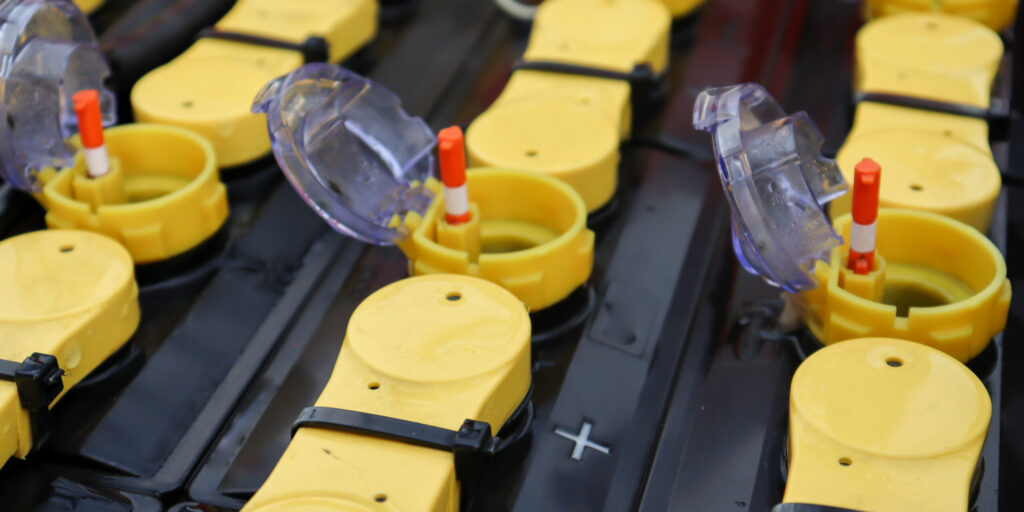
Step 3: Remove the Battery Vent Caps
Next, you need to remove the vent caps from each individual cell in the battery. These caps are typically located on the top of the battery and should be easy to remove by hand or with a tool, depending on your battery’s design.
If your forklift battery has a venting system with a special filling system, it may require additional steps or equipment, such as a water injector, so be sure to follow the manufacturer’s instructions.
Step 4: Check the Electrolyte Levels
Before adding any water, you must check the current electrolyte levels in each cell. The electrolyte level should be about 1/2 inch above the plates inside the battery. If the water level is too low, the plates may become exposed to air, causing damage.
If the electrolyte is at an appropriate level, you don’t need to add any water. However, if it is low, proceed to the next step.
Step 5: Add the Right Amount of Distilled Water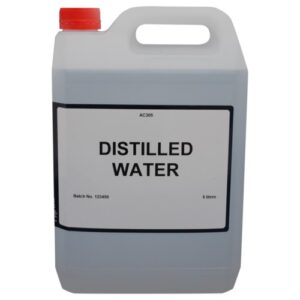
When adding water to your forklift batteries, always use distilled water, not tap water. Tap water contains minerals and impurities that can harm the battery and reduce its lifespan.
Using a funnel or a water injector, slowly add distilled water to each individual cell. Be sure not to overfill—adding too much water can lead to spills during charging. Fill each cell until the electrolyte level is approximately 1/2 inch above the battery plates.
If your forklift battery has a “maintenance-free” or “sealed” design, it may only require watering every few months or in certain circumstances. Always refer to the manufacturer’s specifications for the recommended watering intervals and amounts.
Step 6: Reinstall the Battery Vent Caps
Once you’ve added the correct amount of water to each cell, securely replace the vent caps. This is an important step, as the caps keep the internal pressure balanced and prevent contaminants from entering the cells.
Step 7: Check the Battery After Watering
After watering the battery, recheck it after a few hours to ensure that the water level remains steady. If the water level drops significantly, it could indicate a problem, such as a leak or a damaged cell. In this case, have the battery inspected by a professional.
Step 8: Clean Up
Finally, clean up any spillage around the battery tray or battery compartment to prevent corrosion. A damp cloth with water will suffice to wipe down any residue.
Step 9: Monitor Battery Performance
Once the watering process is complete, monitor the battery’s performance during its next charge cycle. A well-maintained battery will charge more efficiently and provide a longer service life, ensuring that your forklift fleet remains operational and reliable.
Download our step-by-step Forklift Battery Watering Checklist to keep handy!
Let M-Pulse Handle Your Forklift Battery and Charger Maintenance
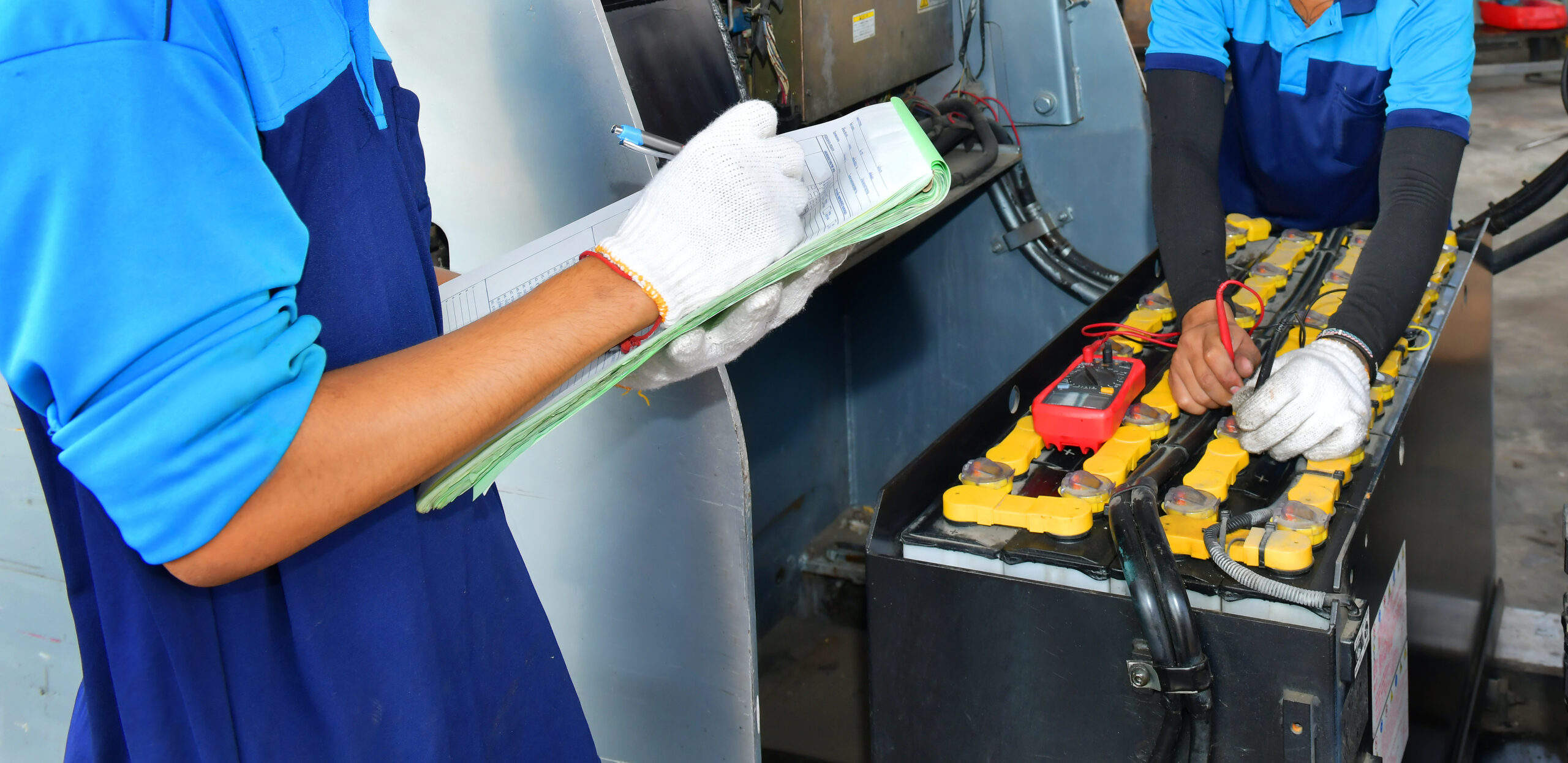
Maintaining forklift batteries is essential for peak performance, but the process can be time-consuming and complex. Let M-Pulse take care of it all! From timely battery watering to preventive maintenance and repairs, we handle every aspect of forklift battery care so you can focus on running your business.
With a wide selection of Quick-Ship Batteries at factory-direct pricing and industry-leading USA-made chargers, M-Pulse provides the products you need to keep your forklifts moving. Our M-Pulse Fleet Software ™ goes a step further by optimizing forklift performance, reducing downtime, and ensuring efficient maintenance tracking through real-time monitoring and reports.
Our full-service support, including nationwide technician services, ensures your fleet stays operational and in top condition. With M-Pulse, you’ll gain peace of mind knowing that your forklift batteries and chargers are being expertly managed.
Let us handle your battery and charger maintenance—contact M-Pulse today to discover how we can enhance your forklift fleet’s reliability and performance.